Earlier in September, we met friends at a trampoline park and indoor play park in Trier, Germany. Based on our U.S. experiences, I was expecting wall-to-wall trampolines and lots of bouncing kids. Instead, we walked into a massive indoor play paradise featuring carnival rides and so much more.
Arrival: The Crowd and the Cost
We are frequent visitors to trampoline parks in the U.S., so I was curious to see how this German version compared as a family friendly activity in Trier. In the U.S. we usually show up right when they open—often around 10:00 AM. That’s the sweet spot before the midday crowds roll in.
In Germany, however, things looked very different. We pulled into the parking lot at 10:55 AM, just before the 11:00 AM opening, and it was already packed. Families were lined up at the door, balloons and cakes in hand for birthday parties, and the whole place buzzed with energy.
We paid the all-day entrance fee (€7 for adults, €13 for kids, free for under 2) and made our way inside.
Where Are the Trampolines?
Once inside, I was surprised by how few trampolines there were—just one set of about ten connected trampolines. They were fun, but definitely not the main attraction.
Instead, the park split into two main zones: The Play Structure Side and The Mechanical Rides Side.
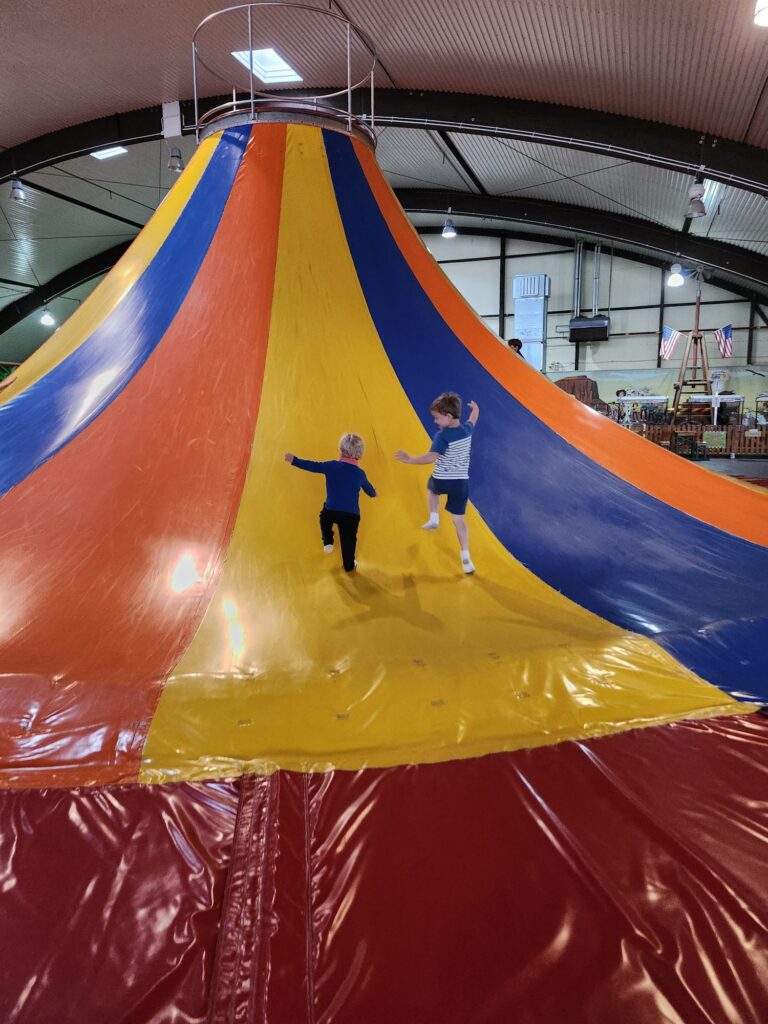
The play structure was enormous—multi-story slides, climbing areas, and a winding maze reaching several stories high. For our youngest, there was a scaled-down version in the toddler corner. In the middle stood a tall, vertical climbing tower with a bouncy base. You run up, try to reach the top, and then slide back down. I’d never seen anything like it before—probably because in the U.S. it would be a lawsuit waiting to happen! But embracing the European way, we all gave it a go and made it to the top.
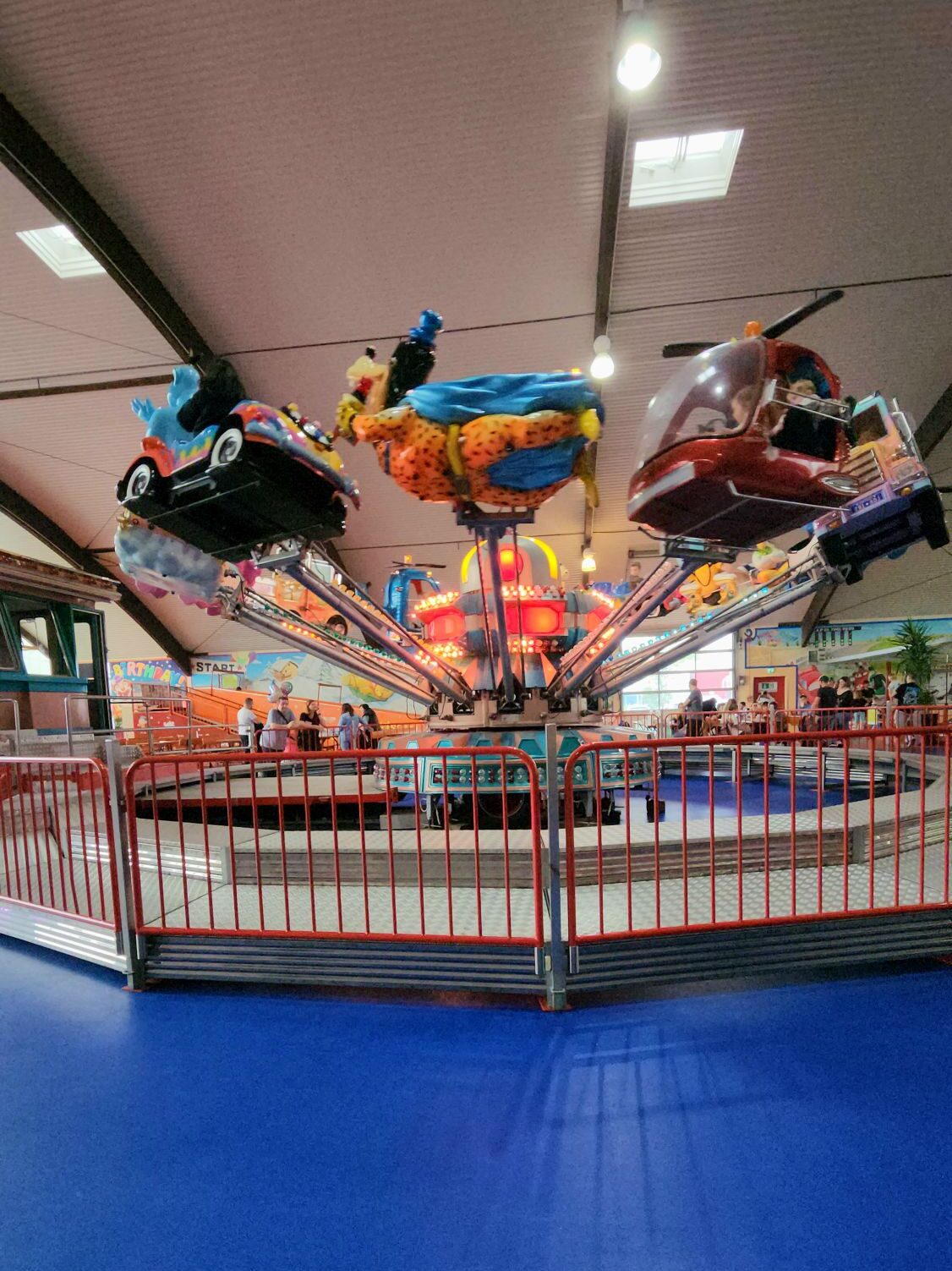

Mechanical Rides: The Self-Service Kind
The other half of the park was filled with carnival-style rides. The surprising twist? Most were unmanned. No attendants, no operators—just rules to follow and trust that parents would step in.
At one point, when our kids got stuck on a ride, it took a few minutes to track down someone to help—but all turned out fine. Some rides were fully self-operating, while others required an adult to oversee. If you were waiting in line, you might suddenly become the “operator.”
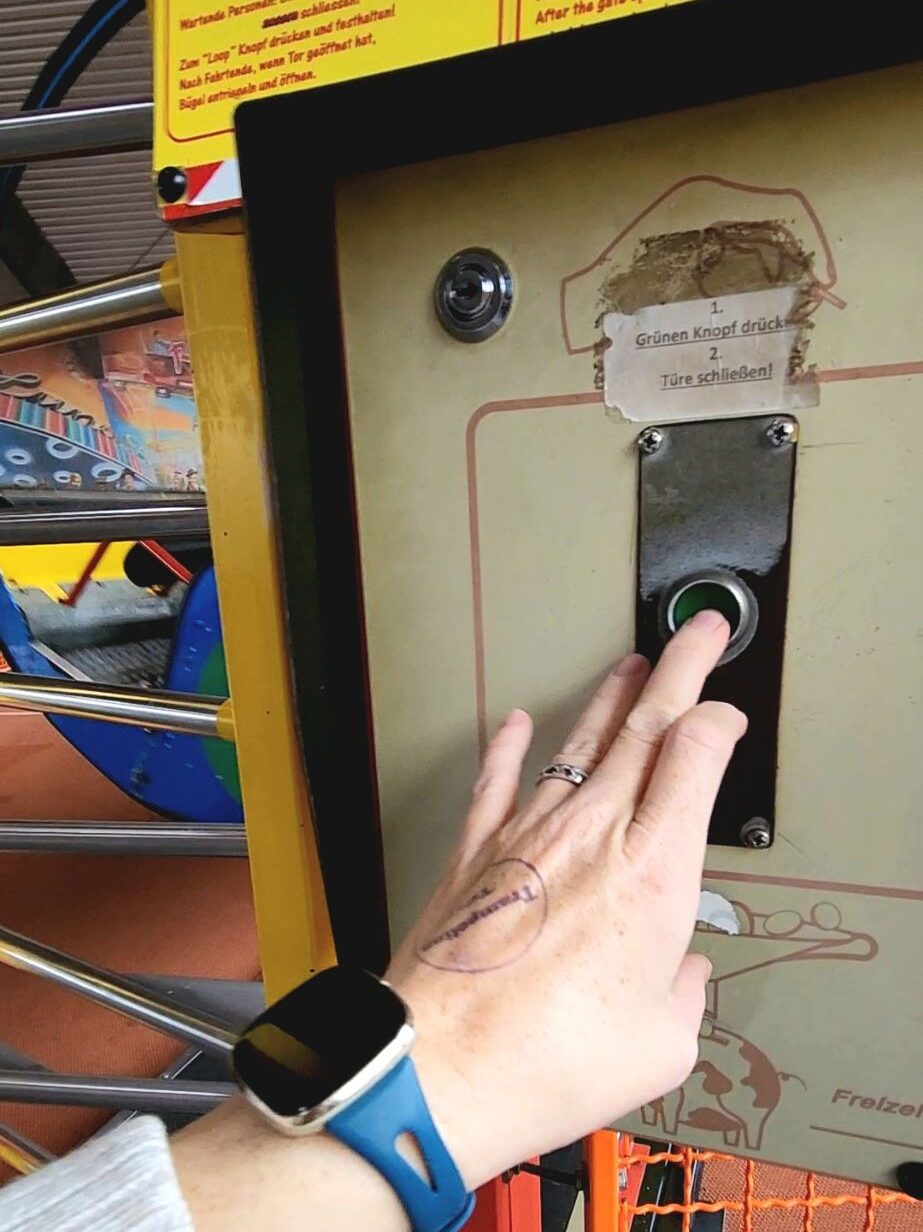
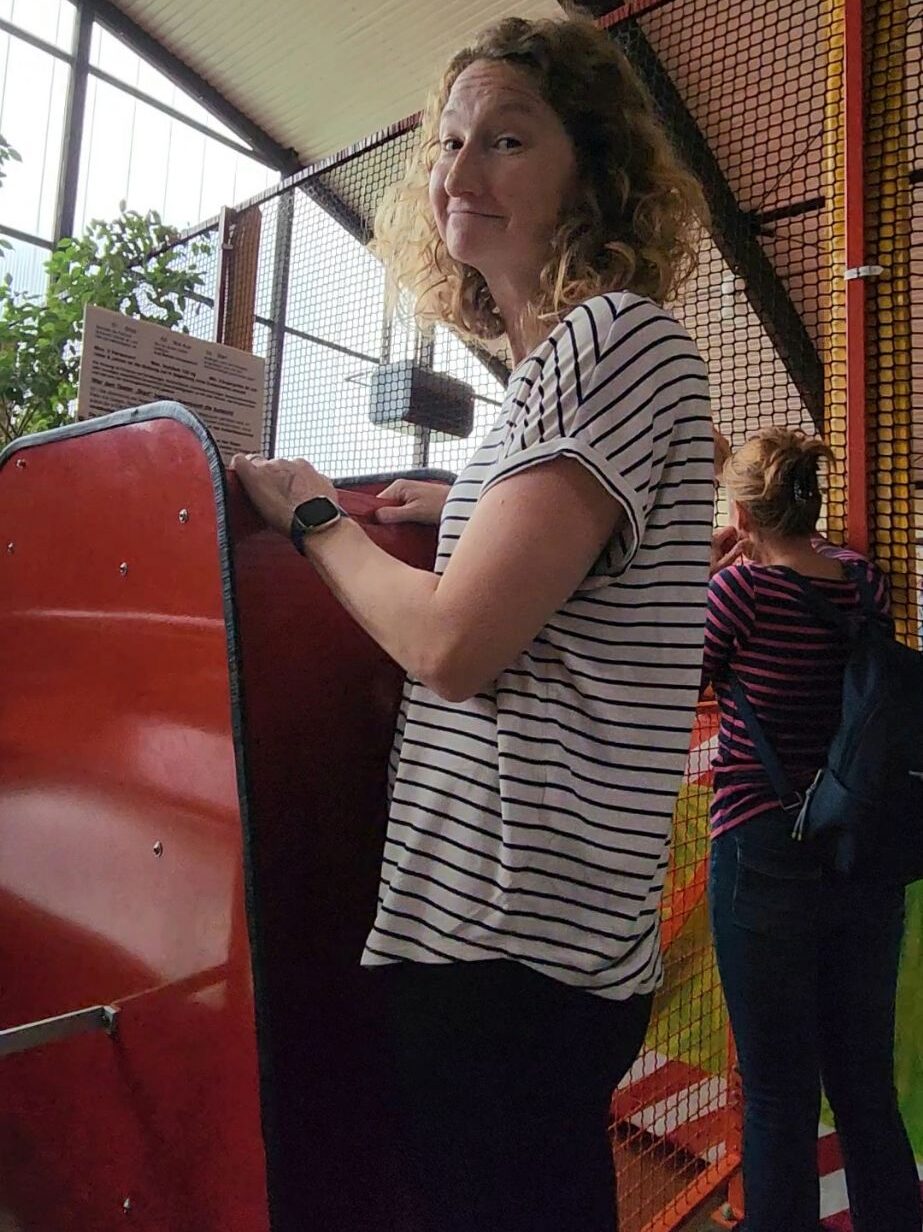
I even took a turn myself. To run the ride, you stand on a metal step to activate the controls. From there, you’re in charge: press the green button and the ride goes, press the red button or step off and it stops. A little surreal, but surprisingly efficient!
A Different Standard of Safety
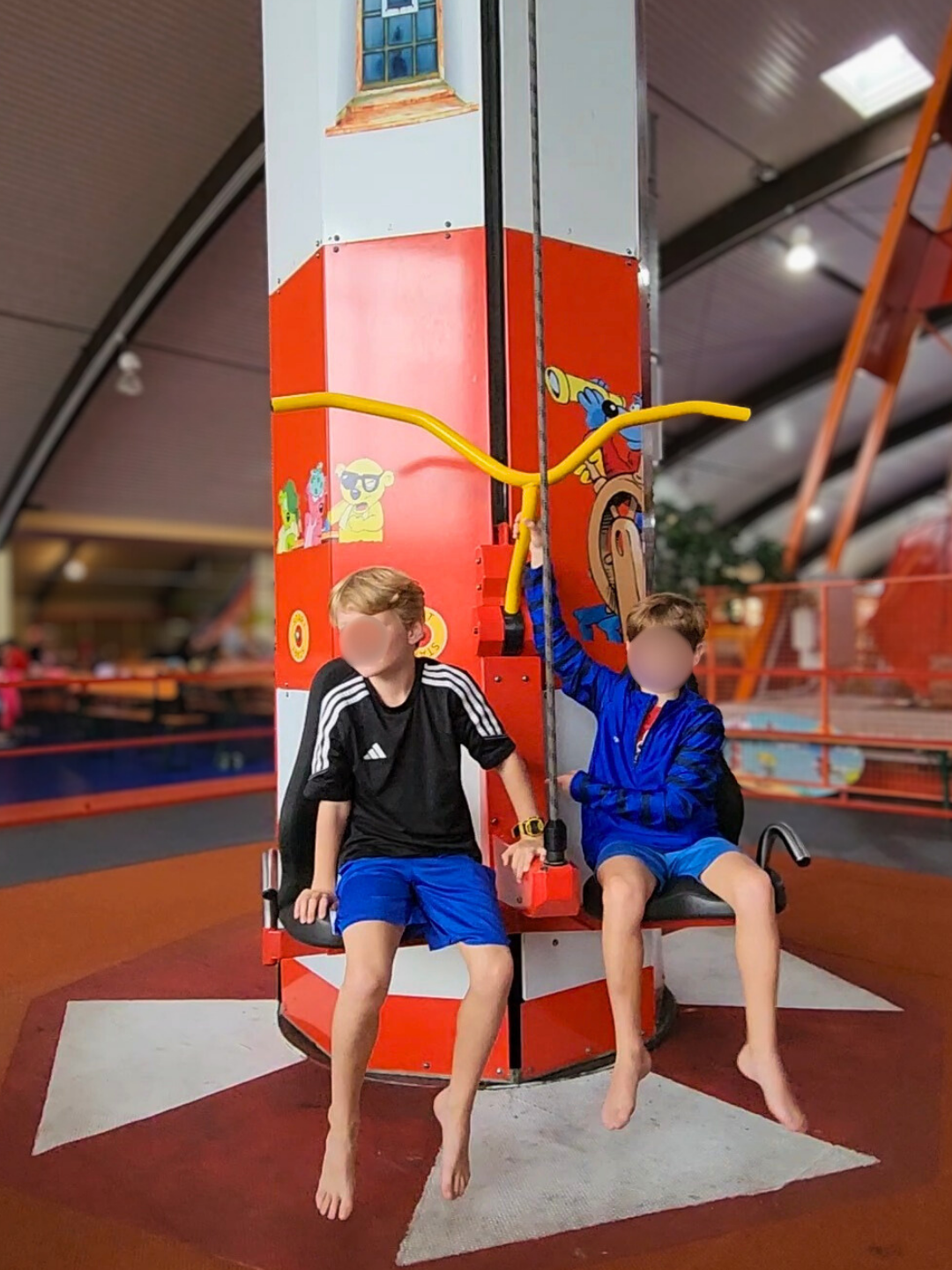
Despite the lack of staff, the whole place felt safer than I expected. Rides only started once seat belts clicked into place, and metal gates automatically locked during the ride cycle. Honestly, it made me realize how over-regulated rides can feel in America – especially compared to family attractions in Germany like this one.
The least safe spot in my opinion? That big circular bouncy tower. Kids slid down unpredictably from the top, which made it tricky with a toddler in tow—it was basically nonstop toddler tag. But our older kids roamed independently and tried ride after ride without long waits, even though the place was crowded with birthday groups.
Final Thoughts and Concessions
A concession stand offered reasonably priced food. We only tried the fries (€4 per plate), which were solid but nothing special. While outside fast food wasn’t allowed, snacks and water bottles were fine to bring in.
All in all, it was a fun and very different kind of play park—less about trampolines, more about adventure.
So tell me—which ride would you want to try first?