It’s such an interesting concept that different cultures have these norms and traditions that outsiders think of as so strange, and locals couldn’t imagine life without. Such is the life of an expat, navigating new norms, responding to the conflicting expectations from multiple cultures, and trying to come up with your own updated sense of norms. Having lived abroad for the past seven years (and a few years when I was a young adult), processing cultures is part of our daily life, but since our move, I’ve been looking at our home with new eyes.
In particular, I’ve been reflecting on our house here in Germany (how we came to own a house in Germany is detailed here). As a German-American family, we renovated this house from afar while living in Tanzania. We somewhat naturally blended all of our favorite parts of houses into our home as we went. And now, looking back on it, we made sure to include American favorites in our German house that make it uniquely ours.
From the lens of a German, including these things might seem excessive and foreign – and from an American perspective, they probably seem so normal that it’s strange I’m even mentioning them. But here are a few American pieces of our Germ-erican home here in Saarland, Germany.
The Master Bath
If you are American, you are thinking, “What?! How is this unique?” but the concept of an ensuite bathroom, let alone a full-sized master bathroom with walk-in closets and his-and-her sinks – that’s not common in Germany. The norm is to have one full bathroom, and maybe a half bath for guests, although not always. As a family, you typically share the one bathroom.
In America, it’s more common to have an attached ensuite bathroom for each bedroom in the house, or sometimes a shared bathroom for two kids’ bedrooms. For a master bathroom, there is often a large room attached to the master bedroom that features a shower and a bathtub, a toilet, two sinks and a wide vanity, a linen closet, and often attached walk-in closets.
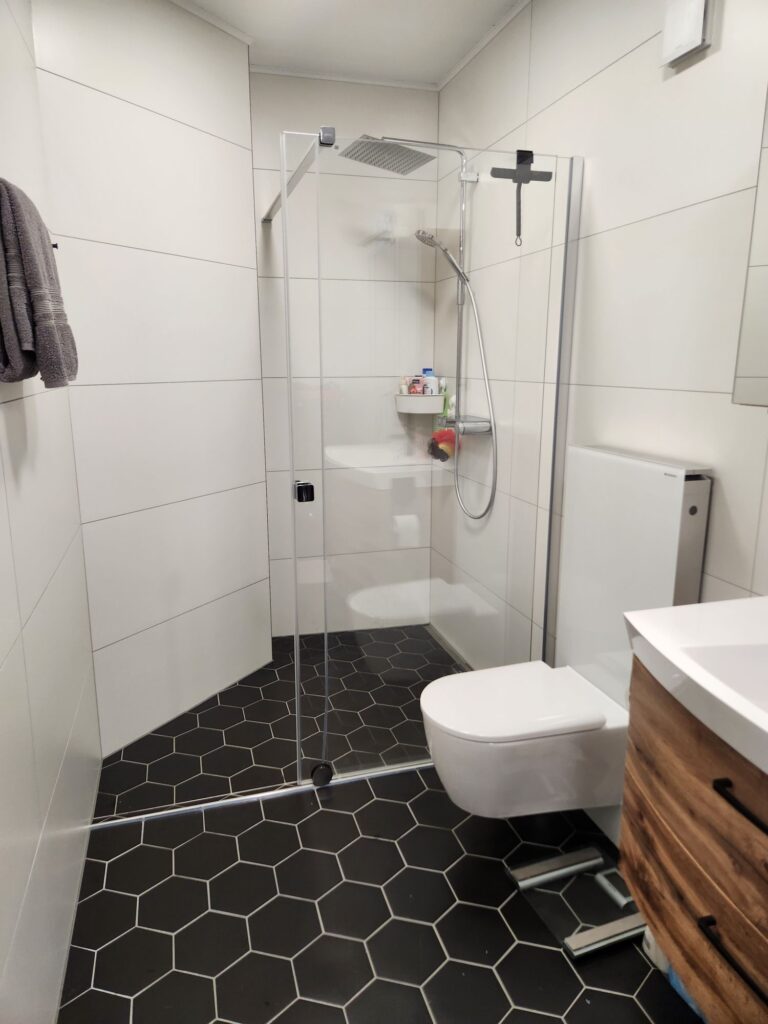
In our house, we really wanted a second bathroom, but we were not planning on tearing down any walls. We came up with a plan to pull plumbing into the side of the master bedroom and corner off a section to become our master bathroom with a shower, toilet, reasonable side vanity, and my favorite addition – laundry!
Laundry
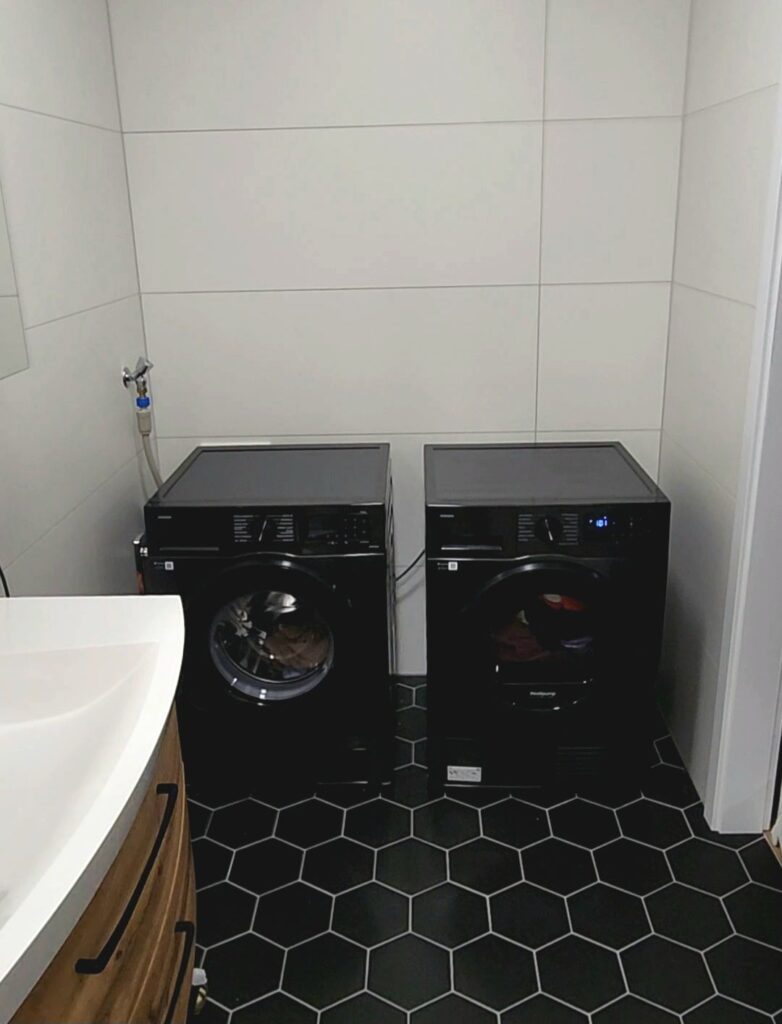
This is when I should mention that separate laundry rooms are also not the norm in Germany. A clothes washer is often installed as an afterthought in an area of the house that already has plumbing – sometimes this is a bathroom, and others it’s the kitchen or basement. Dryers are not very common, and when you do find them in Germany, they do not vent to the outside of the house but collect the water in a removable compartment that you have to empty between washes (but more on that another time). Clothes, therefore, are typically hung up to dry, either outside or on racks inside the house (but again, without a laundry room, the racks are in the living area or spare rooms to dry the clothes).
And therefore, our ensuite bathroom with a washer and dryer is nothing short of luxury for us!
Kitchen
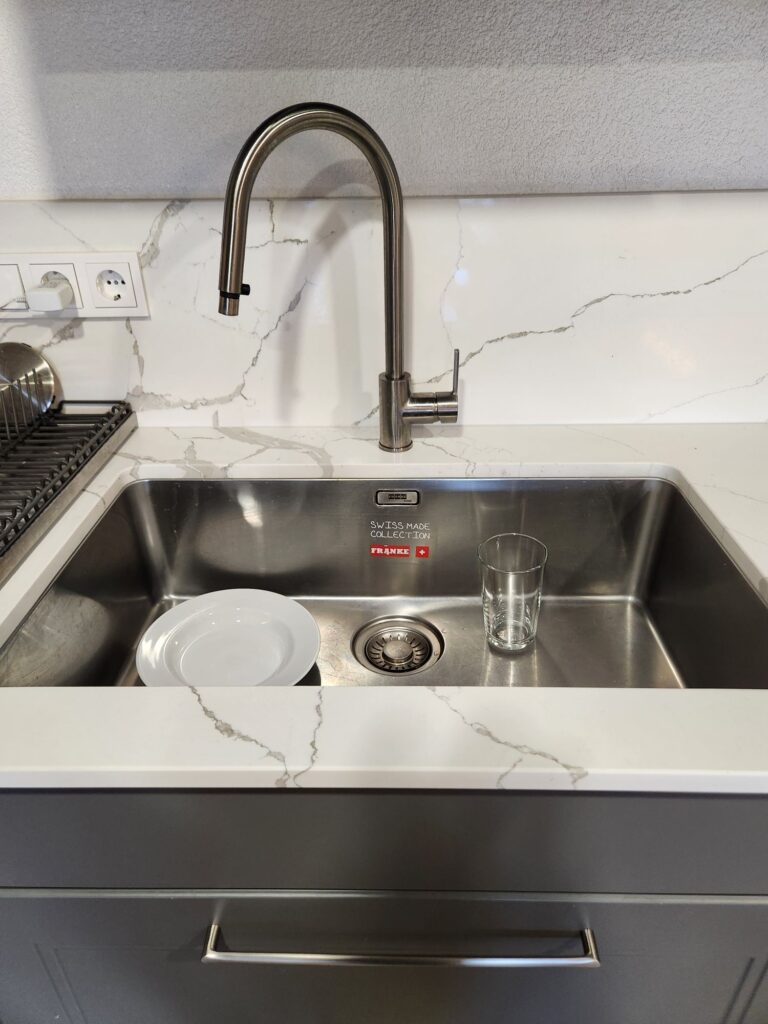
There are several American things about our German kitchen, but two stand out to me the most. First is the sink. Kitchen sinks are often very small and shallow in Germany compared to an American kitchen sink. The average American kitchen sink is about two kitchen cabinets wide, while the sinks in Germany that were being sold during our kitchen renovation were typically the width of one kitchen cabinet (they wind up being deeper than they are wide). Since I am used to the American kitchen sinks, which are double the size, we searched around for a big enough option. We finally settled on an American-style sink that is 70×40 cm (27.5×15.5 inches) for our kitchen here, which is two kitchen cabinets wide. While it’s plenty big, I still sometimes wish it were a tad deeper.
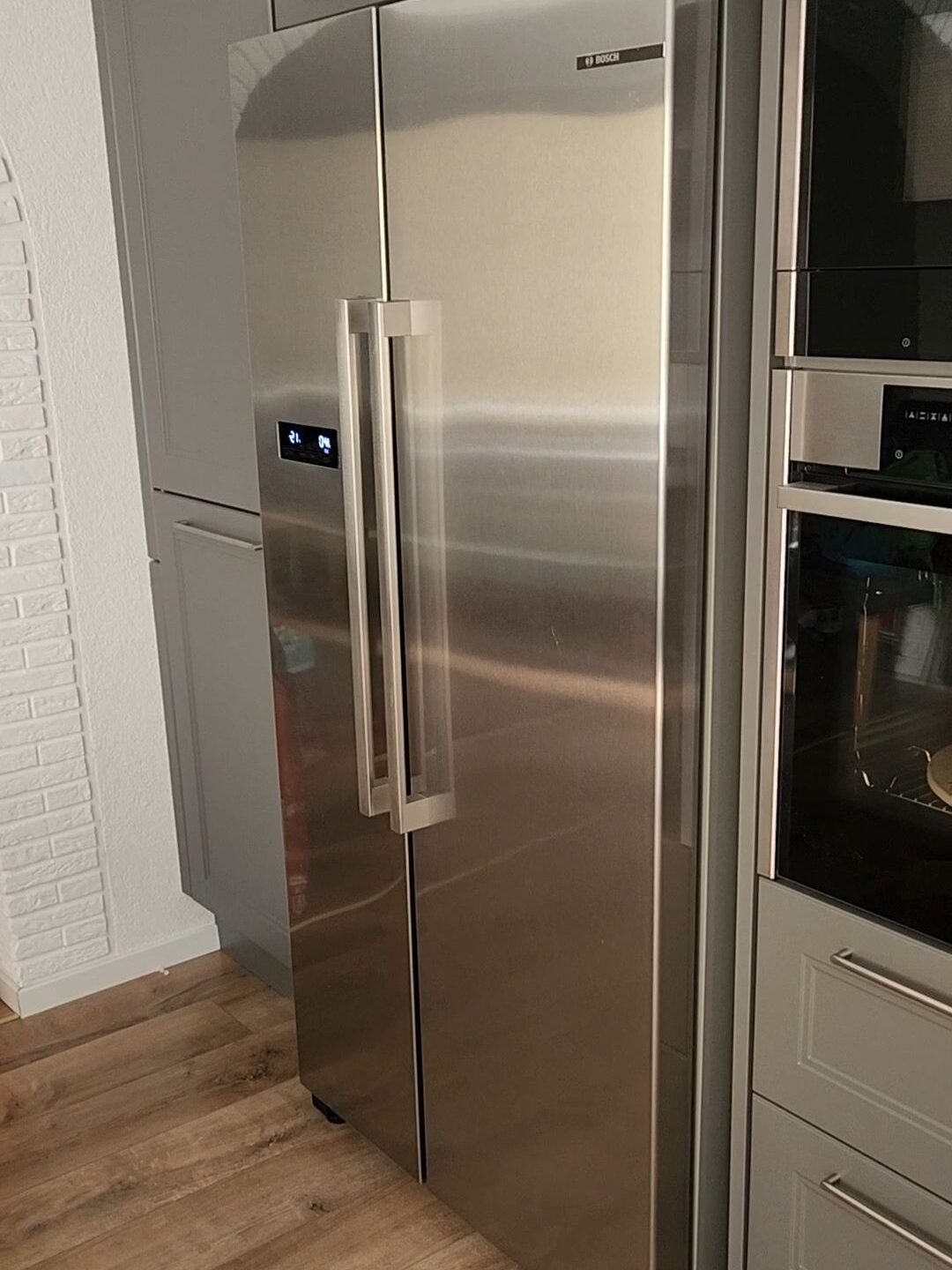
The next difference here is our refrigerator. The normal German fridge is also about the width of one kitchen cabinet, with the freezer on top or bottom of the fridge. In America, a large fridge is essential, and many people have an extra freezer or fridge somewhere in the house (such as the garage, basement, or pantry). We wound up finding a side-by-side refrigerator that is much bigger than the European counterparts. We have a door for the freezer and a door for the fridge, and together it is 32 inches or 92 cm wide – or the width of almost two kitchen cabinets.
Ceiling Fans
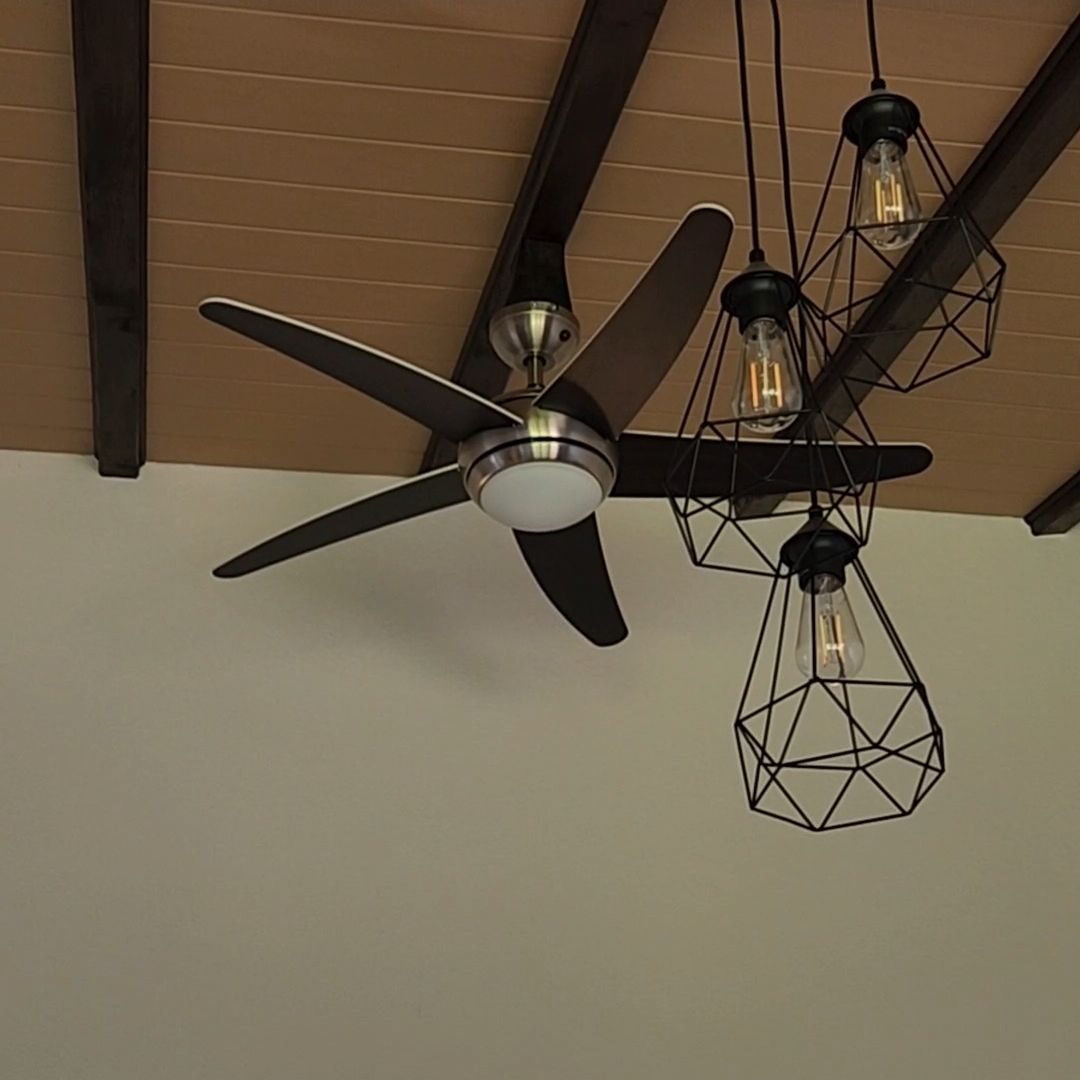
This is not the most glamorous addition, but we are all about practical additions. In Germany, there typically is no air conditioning in houses, and it also isn’t really necessary as the temperatures in summer rarely require A.C. However, there are usually two or three weeks a year that become unbearable without the A.C. For us, we completed most of our renovations during the summer months, so we noticed it more than most. When we went to the store to buy light fixtures for the living room and bedrooms, I couldn’t help but buying the ceiling fans with built-in lights. Interestingly, they are all advertised as summer and winter fans since they can be used in reverse to pull the air up to cool the room, or push it down to spread the rising heat. Honestly, by the time we installed them, the heat wave was over, but every summer during those couple of weeks I lie directly below the rotating fan thanking myself for the foresight of this addition.
What are you most surprised by with our American home additions?

Proudly powered by WordPress
If you find this guide helpful, consider booking your hotel or attraction tickets through my affiliate links. I will earn a small commission at no extra cost to you. This is how I keep this blog running free of charge.